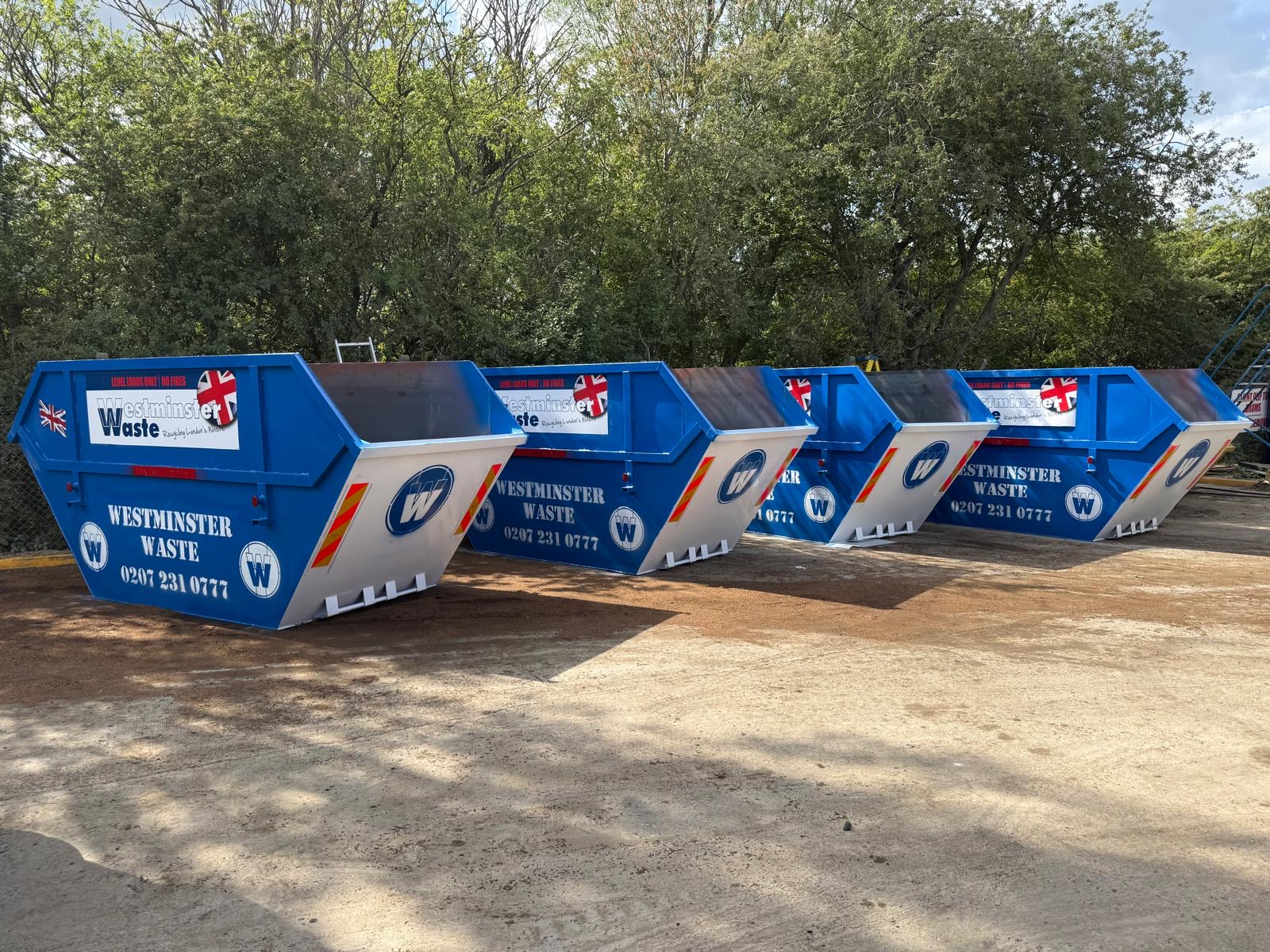
As a broad UK benchmark, skip hire commonly costs between £125 and £320 per week for frequently used domestic sizes. However, the final price can be higher for larger skips, London delivery locations, specialist waste or bookings that require a road permit.
In this guide, we explain what goes into the cost of skip hire, how to choose between our 4, 8, 12 and 16-yard skips, when you may need a permit and what to check before you book.
You can also select and book a skip online or speak to our team for tailored advice.
How much does skip hire cost in the UK?
When you pay for skip hire, you are not simply paying for an empty container to arrive at your property. Depending on the supplier, your quote may also cover delivery, collection, transport to a licensed waste facility, sorting, recycling and disposal.
That is why the lowest headline price is not always the cheapest quote overall. Before booking, check exactly what is included and whether you could pay extra for permits, restricted waste or keeping the skip for longer than planned.
What affects the cost of hiring a skip?
There is no single price for a skip of a particular size. Two identical skips can cost different amounts depending on where they are going, what you put in them and how straightforward the delivery is.
The main factors are skip size, postcode, waste type, placement, access and hire duration.
Skip size
Larger skips generally cost more, but automatically choosing the smallest skip can be a false economy. If it fills up halfway through the job, you could end up paying for a second container, delivery and collection.
Going too large has the opposite problem: you may pay for capacity you never use. A realistic estimate of how much waste you have is usually a better starting point than simply choosing the biggest or cheapest option.
Delivery postcode and access
Where the skip is going matters too. Your postcode helps the supplier calculate the route, confirm local coverage and assess the site.
Prices can vary between London boroughs and nearby sites, particularly where narrow gates, parked vehicles, overhead cables or limited turning space complicate delivery.
Tell the supplier about any access restrictions when you request your quote. It is much easier to solve them before the lorry arrives.
Waste type
A skip full of cardboard is very different from one full of concrete. What goes into the skip affects how the contents must be handled and processed. General mixed waste may be treated differently from timber, metal or construction waste, while heavy materials such as soil, rubble and concrete can affect which container is suitable.
Hazardous or restricted materials need specialist handling, so always mention them before you book rather than adding them to a standard skip later.
Placement and hire duration
A skip on your own suitable private land is usually simpler to arrange than one sitting on a public road. Road placement requires local authority approval and may add a permit cost to the booking.
Some providers include a set hire period and charge for extensions. Before confirming your booking, check the delivery and collection dates and what happens if your project runs over.
Which skip size do you need?
Westminster Waste currently provides 4, 8, 12 and 16-yard skips. Choosing between them comes down to two things: how much waste you have and how much room you have for the container.
| Skip size | Published capacity | Often suited to |
| 4-yard open skip | 3.1m³ | Small clear-outs, minor refurbishments and limited waste volumes |
| 8-yard open skip | 6.10m³ | Building work, property refurbishments and medium-sized projects |
| 12-yard open skip | 9.20m³ | Larger clearances and bulky, relatively light waste |
| 16-yard open skip | 12.20m³ | High volumes of bulky, lighter material |
For smaller clear-outs or refurbishment jobs, the 4-yard open skip gives you the most compact option in our published range.
The 8-yard skip gives you more room for building, refurbishment and clearance work. Although 6-yard skips are common with some providers, our range moves directly from 4 to 8 yards, so our team can help you work out which is the better fit.
For larger clearances, the 12 and 16-yard options offer much more volume. However, bigger does not mean you can fill them with unlimited heavy waste. Soil, rubble and concrete can quickly add significant weight, so check the restrictions before ordering.
Our 12 and 16-yard skips must also be positioned on private property rather than a public road.
You can compare the full dimensions and capacities in our skip and container size guide.
Can you hire a skip for one day?
Possibly. One-day or short-term skip hire may be available depending on your postcode, our collection schedule, availability and whether a road permit is involved.
Just bear in mind that a shorter hire is not automatically much cheaper. The skip still has to be delivered, collected and taken away for processing, which accounts for a significant part of the overall cost.
If you need a skip delivered and collected within a specific window, let our team know when requesting your quote so we can confirm what can be arranged.
How long can you keep a hired skip?
There is no universal hire period that applies to every booking. How long you can keep a skip depends on your agreement and, if it is placed on a public road, how long the council permit remains valid.
Do you need a permit for a skip?
The easiest rule to remember is: private land usually means no permit; a public road usually means you need one.
Fees and conditions are set by the relevant council, so there is no single nationwide permit price. Either the customer or the skip company may be responsible for applying, depending on the area. Councils may also require reflective markings, cones or lights at night.
Placement itself matters too. We cannot put a skip on a pavement or lift one over a wall, and a driveway must have a dropped kerb. The ground also needs to be suitable for the weight of the container, its contents and the delivery vehicle.
What cannot go in a skip?
Before you start filling your skip, it is worth knowing that “general waste” does not mean absolutely anything can go in.
Restricted items include batteries, oils and paints, asbestos, chemicals and solvents, electrical items, tyres, gas containers, clinical waste and persistent organic pollutants (POPs) waste, which can include upholstered domestic seating such as sofas and armchairs.
We provide specialist hazardous waste disposal for materials including CoSHH waste, WEEE, asbestos and POPs waste.
If you are unsure about an item, ask before putting it in the skip. Undeclared restricted materials can cause collection delays, refusal or additional specialist disposal costs.
And however tempting it is to squeeze in one final item; waste must stay within the safe fill level so the skip can be transported securely.
How to hire the right skip
A little planning before you order can save you from paying for the wrong size, arranging a last-minute permit or discovering that the delivery lorry cannot access the site.
1. Identify the waste
Start with what you are actually throwing away. Consider the type of waste and roughly how much there will be.
Separate general, recyclable, construction and hazardous materials where possible, and flag anything you are uncertain about before booking.
2. Choose the most suitable size
Compare the 4, 8, 12 and 16-yard options based on waste volume and available space. Remember that bulky and heavy waste behave differently: bulky material can fill the container surprisingly quickly, while dense materials may reach weight restrictions before the skip looks full.
3. Decide where the skip will go
Check there is enough space for the skip and delivery vehicle. Tell the supplier about gates, parked cars, overhead restrictions or limited turning room. If you plan to use a driveway, it must have a dropped kerb and be suitable for the weight involved.
4. Check whether a permit is required
If the skip will sit entirely on suitable private land, you will not normally need a licence. If it needs to go on a public road, council approval will usually be required. Confirm who will arrange the permit, how much it costs and how long it will remain valid.
5. Request an exact quote
The more information you provide, the easier it is to give you an accurate price. Include your postcode, preferred size, waste type, proposed placement, delivery date, expected hire duration and any known access or permit requirements.
6. Book and prepare for delivery
You can select and book a skip online or contact Westminster Waste for advice.
Before delivery day, clear the placement area, move parked vehicles, open any gates and make sure your site contact is available. Then wait until the skip has been safely positioned before you start loading.
What if a standard skip is not the best option?
A skip is useful for plenty of jobs, but it is not automatically the most practical option for every site or every volume of waste.
For larger quantities, we provide 20, 30 and 40-yard roll-on roll-off containers. If there is no room to leave a container on site, a cage van collection may make more sense. For bigger or more labour-intensive jobs, we can also arrange a managed site clearance.
The right choice depends on how much waste you have, what it consists of, the access available and how much help you need with removal. Tell us about the project rather than simply asking for the biggest skip, and we can recommend the most suitable option.
Get an accurate skip hire price from Westminster Waste
The easiest way to know exactly what your skip will cost is to tell us what you need. Westminster Waste supplies 4, 8, 12 and 16-yard skips across London and the South East, with specialist containers and collection services available where a standard skip is not the right fit.
Choose and book your skip online, or contact our skip team for advice on size, access, waste types and delivery.
Skip hire FAQs
How much does it cost to hire a skip?
Frequently used domestic skip sizes commonly cost around £125 to £320 per week as a broad UK benchmark. Your actual quote will depend on the skip size, delivery location, waste type, placement, hire duration and any permit requirements.
What is the smallest skip Westminster Waste offers?
The smallest option currently shown in our range is the 4-yard open skip, which has a published capacity of 3.1m³.
Does Westminster Waste offer a 6-yard skip?
Our published range moves from 4 to 8 yards. If you are unsure which is closer to the capacity you need, speak to our team before booking.
Can you put a skip on a driveway?
A skip can be placed on a suitable private driveway, provided it has a dropped kerb and there is safe access for the delivery vehicle. The surface must also be suitable for the weight of the skip and its contents.
Can you hire a skip for one day?
A short hire may be possible depending on availability, location, delivery routes and permit requirements. Contact the skip team with your preferred dates so we can confirm availability and provide a tailored price.
Do you need a permit to hire a skip?
A permit is generally required when the skip is placed on a public road. A skip positioned entirely on suitable private property does not normally need one, although local rules should always be checked.
How do you order a skip?
Work out what you are disposing of, choose a suitable skip size, decide where it will go and check whether a permit is required. You can then book online or contact the skip team if you need help choosing.