Construction and demolition waste accounts for more than 60% of all waste generated in England. With the capital's development pipeline at record levels, the decisions made on London's sites in 2026 will define how far the industry moves toward genuine circularity.
Construction and demolition waste accounts for more than 60% of all waste generated in England. With the capital’s development pipeline at record levels, the decisions made on London’s sites in 2026 will define how far the industry moves toward genuine circularity.
Construction and demolition (C&D) waste is the single largest waste stream in England — accounting for roughly 62 million tonnes annually, more than 60% of all waste generated across all sectors. For London, which is in the middle of a sustained development cycle, that figure is not abstract. It translates directly into the decisions being made every day on thousands of sites across the capital.
The Scale of the Problem
The construction sector’s waste challenge isn’t primarily one of recycling technology — it’s one of segregation practice. The infrastructure exists to recover and reprocess the vast majority of C&D materials. Concrete, brick, timber, metal, plasterboard, aggregates — all of these have well-established recycling routes. The barrier to diversion is almost always what happens before the waste leaves the site.
Mixed loads are the industry’s biggest own-goal. When materials are commingled — timber with hardcore, plasterboard with aggregate — the options for high-quality recovery narrow sharply. Contaminated mixed loads are harder to sort, attract lower prices from reprocessors, and frequently end up routed to lower-grade recovery or landfill that could easily have been avoided with better on-site practice.
“The single most effective intervention in construction waste management is segregation at the point of generation — on the floor, on the scaffold, in the skip. Everything downstream is easier when that step is done properly.”
— Westminster Waste Operations
What Best Practice Looks Like in 2026
-
Pre-demolition audits — assessing material volumes and composition before a single wall comes down
-
Stream-specific containers positioned at the point of generation, not just at the site boundary
-
A designated waste manager on larger sites, responsible for maintaining segregation discipline
-
Waste Transfer Notes for every load, with material description and destination documented
-
Regular contractor reviews — are your diversion rates actually being tracked and reported?
-
Deconstruction over demolition where programme allows — recovering materials in usable form rather than as rubble
The Role of the Waste Contractor
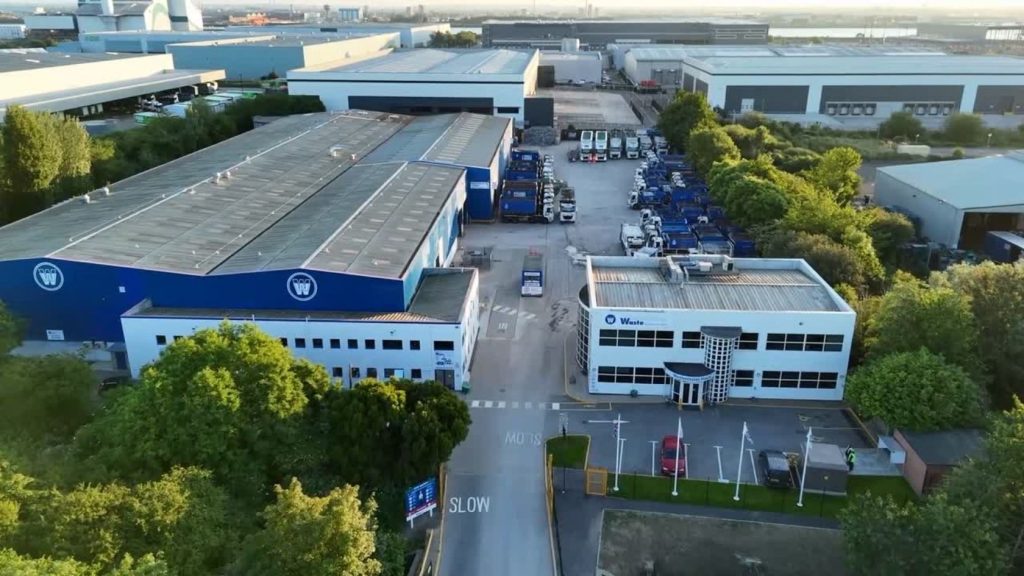
Your waste contractor’s infrastructure matters as much as your on-site practice. A skip that leaves your site well-segregated can still end up in a mixed load at the wrong transfer station. Westminster Waste’s Belvedere Materials Recovery Facility processes C&D waste across dedicated stream lines — concrete, brick and aggregates through one route, timber through another, metals separated and baled for reprocessors — with a consistent diversion rate of 100% from landfill.
For central London sites where road access is constrained, we also operate barge movements via the Thames — removing HGV pressure from already congested streets and cutting the carbon footprint of waste logistics significantly. For a major riverside development, this can remove hundreds of truck movements from the surrounding road network over the life of a project.
Regulatory Direction of Travel
The regulatory environment is tightening. DEFRA’s Resource Efficiency and Waste Reduction roadmap sets clear expectations for the sector, and the Environment Agency has been increasing enforcement activity on illegal dumping and poorly documented waste transfers. For developers and contractors, robust waste documentation isn’t just best practice — it’s an increasingly important element of planning compliance, lender due diligence, and ESG reporting.
If your current waste contractor isn’t providing stream-level tonnage data, diversion certificates, and full Waste Transfer Note documentation as standard, it’s worth asking why — and whether your duty of care obligations are being properly fulfilled.
Westminster Waste works with developers, main contractors and demolition specialists across London. To discuss your project’s waste management requirements, contact our team on 020 7231 0777